A blood pressure check at your doctor’s office is useful, but it captures just one moment. Blood pressure monitoring at home can help you and your care team see what happens between appointments—while you stay in your familiar routine.
You do not need to become a health expert to get started. A suitable monitor, a comfortable place to sit, and clear guidance can make home checks feel manageable. They add information to your care; they do not replace office visits.
- A pattern of properly taken readings is more useful than one result.
- Cuff fit, body position, and a few quiet minutes matter.
- Your care team can help you set a schedule and understand your numbers.
- Home monitoring is not an emergency response service.
- Insurance coverage depends on eligibility and plan terms.
Why one office reading may not tell the whole story
Blood pressure changes throughout the day. Activity, stress, caffeine, and other everyday factors can affect a reading. That is one reason your clinician may want more information before drawing conclusions.
Some people have higher readings at an appointment than they do at home. This is often called white coat hypertension. Mayo Clinic explains this office-related rise in blood pressure and why it still deserves a conversation with your clinician.
The reverse can happen, too: readings may look normal at the office but run higher elsewhere. University Hospitals describes how office checks can differ from usual blood pressure.
Home checks can help fill in those gaps. Your clinician may compare your home record with office readings or recommend another type of monitoring to understand the difference.
The goal is not to chase a perfect number. It is to build a useful picture you and your care team can understand together.
Not everyone needs daily checks. Ask your clinician whether home monitoring would help you and what schedule makes sense for your care.
How to make home blood pressure checks a simple routine
Choose the right cuff
An automatic, validated upper-arm monitor is generally recommended. “Validated” means the device has been tested for accuracy. A cuff that is too small or too large can affect the result.
Ask your care team which device and cuff size suit you. You can also explore VitalGuard’s home blood pressure monitor and ask about setup support before getting started.
Bring your monitor to an appointment so someone can check its fit and watch your technique. If fastening the cuff or reading the screen is difficult, say so—those are practical needs worth addressing.
Get comfortable before you press start
The American Medical Association’s home measurement guidance emphasizes preparation and consistent technique. Use this checklist unless your clinician gives you different instructions:
- Prepare ahead. Avoid exercise, smoking, and caffeine for 30 minutes before measuring. Empty your bladder.
- Rest quietly. Sit for at least five minutes before starting. Put aside conversations, phone calls, and other distractions.
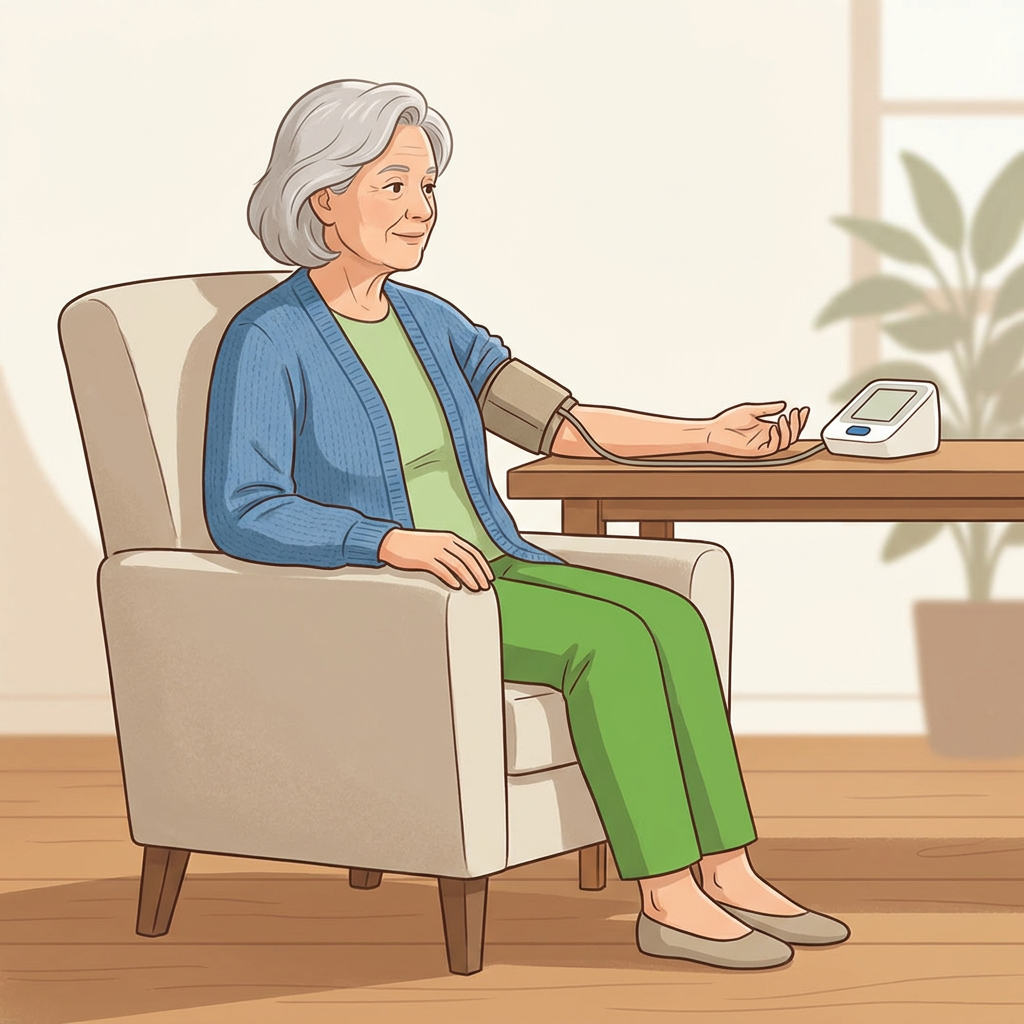
- Support your body. Keep your back supported, feet flat on the floor, and legs uncrossed.
- Position the cuff and arm. Place the cuff on bare skin, following the device instructions. Support your relaxed arm so the cuff is at heart level.
- Take two readings. Stay still and do not talk. Common guidance is to take two readings one minute apart and record both.
Keep a record that works for you
Ask when to measure, how often, and how to share your readings. A notebook or device record can help you keep the date, time, and both results together.
A small routine tip: Keep your monitor near a sturdy chair and table. Once your clinician recommends a schedule, connect the check with a familiar part of your day—but leave enough time to sit quietly first.
What your readings can—and cannot—tell you
Your monitor displays two blood pressure numbers, usually measured in millimeters of mercury, or mm Hg. Each number describes a different part of your heartbeat.
| Number | What it means |
|---|---|
| Top: systolic | Pressure when your heart beats. |
| Bottom: diastolic | Pressure when your heart rests between beats. |
Ask your clinician for your personal target and a written plan for readings outside that range. Your medical history and treatment needs help guide that plan.
Helpful ways to use readings
- Record results and the time taken.
- Note symptoms or unusual circumstances.
- Discuss patterns with your care team.
What to avoid
- Diagnosing yourself from one result.
- Repeatedly checking without a plan.
- Stopping or changing medicine on your own.
A reading is information, not a judgment about how well you are caring for yourself. Share your questions openly, including concerns about medicines or trouble following the measurement routine.
When not to wait for a monitoring reply
If your top number is higher than 180 or your bottom number is higher than 120 and you have no concerning symptoms, wait at least one minute and measure again. If it remains that high, contact a healthcare professional immediately.
Call 911 for chest pain, severe shortness of breath, or stroke symptoms such as sudden weakness, trouble speaking, or a drooping face—regardless of the reading. Do not wait to repeat a measurement or receive a monitoring reply when these symptoms occur.
This article provides health education, not a diagnosis or individualized treatment advice. Follow your clinician’s care plan and do not change prescribed medicine based on this article or a device reading alone.
How VitalGuard adds personal support between visits
Remote patient monitoring is a service that helps your care team review health readings collected with devices you use at home. It pairs home measurements with human support, rather than leaving you to make sense of every number alone.
VitalGuard offers easy-to-use home health monitoring devices for blood pressure, weight, blood glucose, and oxygen levels. Your care needs help determine which measurements are appropriate; you do not necessarily need every device.
VitalGuard’s support includes:
- Daily clinical monitoring and monthly doctor oversight.
- Personalized health coaching to help fit health routines into everyday life.
- Unlimited telehealth and device support for questions about care and equipment.
That support can mean help setting up a cuff, reviewing measurement steps, or discussing how to make checks easier. Learn more about how VitalGuard remote patient monitoring works, and ask how readings are shared and when you can expect help.
Daily monitoring does not mean constant watching. Remote monitoring and telehealth are not emergency services or substitutes for emergency care.
If you wish, invite someone you trust to help with your routine or join a telehealth conversation. VitalGuard’s guide to caregiver access and family support offers a starting point for discussing involvement and permissions.
You remain part of decisions about your care. Family support can provide reassurance without taking over.

Questions to ask about getting started and coverage
You deserve clear answers before adding a service to your routine. Bring these questions to your clinician or a conversation with VitalGuard:
- Is home blood pressure monitoring right for me?
- Which device and cuff size do I need?
- When should I check, and what is my target range?
- Who reviews my readings, and how do I get help?
- What should I do if a reading concerns me?
- What will my insurance cover, and what might I pay?
Remote patient monitoring Medicare coverage depends on eligibility and plan terms. Having Medicare does not automatically mean you qualify or owe nothing. Insurance coverage is available, subject to those requirements.
Review VitalGuard’s guide to Medicare coverage and possible monitoring costs. Then confirm your own benefits, any deductible or coinsurance, and other out-of-pocket costs with VitalGuard and your insurer.
A useful home routine starts with a clear plan—not more pressure. The right questions can help you decide whether monitoring fits your health needs and the way you want to live.
Want help building a blood pressure routine at home?
Talk with VitalGuard about devices, personal support, and coverage. Take time to understand your options and choose your next step.