Chronic Disease Management
Blood glucose monitoring at home does not have to come with a complicated recordkeeping system. A few clear notes can help you and your care team talk about your readings, your routine, and questions that come up between visits.
Your log can be a notebook, a printed sheet, or a device-connected record. The best choice is one you can use comfortably—and share when you need support.
- Ask your clinician when to check and what your personal target range is.
- Record the reading, its unit, the time, and a little everyday context.
- Keep missed readings and delayed medicines honest; never fill in guesses.
- Follow your care plan for concerning readings. Do not wait for a log review when action is needed.
Start With a Testing Plan That Fits Your Care
Before starting a blood sugar tracking log, ask your clinician what information will be most useful. How often you check can depend on your medicines, health needs, and the device you use.
The CDC’s guide to monitoring blood sugar explains that checking and recording readings can help you understand your levels. Your own care team should set your testing schedule and targets rather than having you copy someone else’s routine.
Get three things clear before you begin
- When to check: Ask for specific times and whether meals affect the timing.
- Your personal target range: Keep it somewhere easy to find.
- What to do next: Ask for written steps for readings outside your range, symptoms, and unexpected results.
Follow the instructions for your prescribed device. For a finger-stick meter, wash your hands with soap and water and dry them well before testing. Use test strips made for your meter, check their expiration date, and store them as directed.
Cleveland Clinic’s blood sugar monitoring guide describes testing methods and preparation. If your meter is hard to handle or its display is difficult to read, ask your team to walk through a test with you and discuss suitable options.
What to Write in Your Blood Sugar Tracking Log
A useful log pairs the number with what was happening around that time. Record the reading exactly as displayed, including its unit, such as mg/dL or mmol/L. Do not convert the number unless your care team asks you to and explains how.
Copy the headings below into a notebook or use them to make a printable sheet. On a smaller screen, scroll sideways to see every column.
Fictional example only: The sample reading is not a target or treatment recommendation. The medicine entry is only an illustration; your log should name the medicine and prescribed dose you actually took.
| Date | Time | Reading + unit | Meal timing | Meal notes | Medicine, dose, time | Symptoms + time | Other context |
|---|---|---|---|---|---|---|---|
| May 6 (fictional) | 8 a.m. | 142 mg/dL | Before breakfast | Breakfast not yet eaten | None taken yet today | None noticed | Slept less than usual |
| Your date | Your time | As displayed | Before/after food | Brief food notes | What you took and when | What you felt and when | Activity, illness, or stress |
Keep context short and specific
For meal timing, write something plain, such as “before breakfast” or “two hours after starting lunch.” Let your clinician specify any required timing. Note what you ate, and include carbohydrate amounts only if they are part of your care plan.
When relevant to your plan, record the medicine name, prescribed dose actually taken, and time taken. Note missed or delayed doses honestly. Logging is not a reason to change or double a dose.
Write down symptoms and when they happened, even if you did not take a reading. Briefly note unusual activity, illness, or stress without assuming these explain the number. If you miss a check, leave that entry blank or mark it “missed” instead of guessing.
Make Logging Part of Your Usual Routine
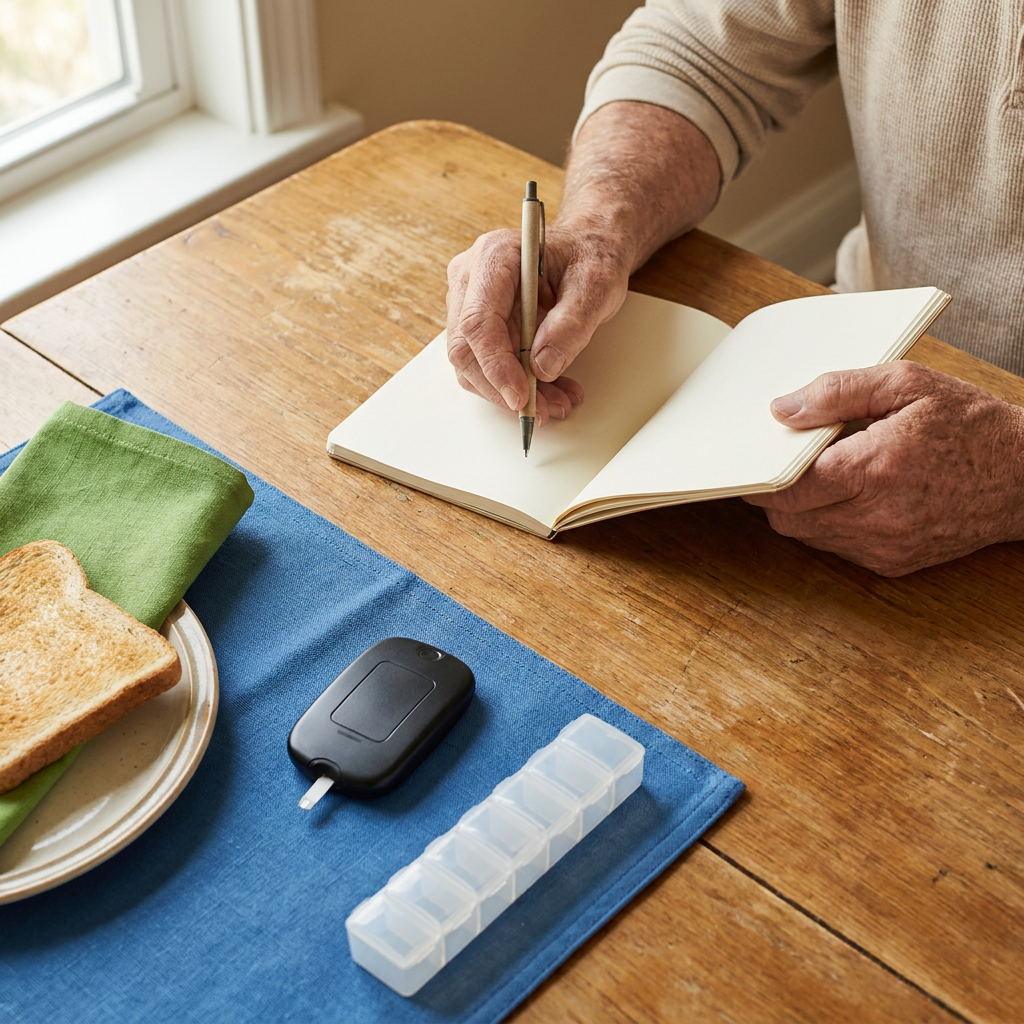
A short routine is often easier to keep than a detailed diary. Choose a comfortable place with enough light to read your meter and write your notes.
- Check as directed. Follow your device instructions and your personal testing plan.
- Record the reading and time. Add the unit while the result is still in front of you.
- Add a brief note. Include meals, medicine, symptoms, or other context your team requested.
Paper may suit you if…
- You prefer a large-print notebook or printed sheet.
- You like keeping readings and questions together.
- You want a record that does not require an app.
A connected log may suit you if…
- Your prescribed device can send readings.
- You want less manual copying.
- You know how to share notes that do not upload.
Not every meter sends information automatically. Ask whether your device shares readings and whether meal, medicine, and symptom notes go with them. VitalGuard’s guide to cellular and Bluetooth monitoring devices can help you prepare questions about phone and connection needs.
Keep your log and supplies together, following each item’s storage instructions. Useful, accurate notes matter more than a perfect log. If you miss an entry, resume at your next planned check.
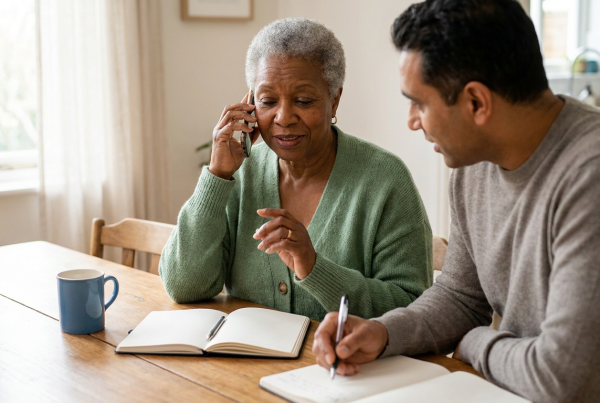
If you want family support, agree on a role that works for you. A family member might write while you read the display or help list questions before a visit. You decide what to share and how involved they should be.
Share Your Log and Ask About Patterns
Ask your care team how and when to send your log, and use their approved sharing method. Bring your meter or record to appointments if requested. There is no need to wait until every entry is complete before asking a question.
Your log is a conversation starter—not a report card.
These questions can help you make the most of a review:
- Do you notice a pattern in my readings?
- Are my meal notes useful?
- What should I record differently?
- What should I do if a reading is outside my range?
- Whom should I contact between scheduled reviews?
How home monitoring support fits in
Remote patient monitoring is a service that lets you share health readings from home with your care team using connected devices. The U.S. Department of Health and Human Services describes how connected glucose tools and other technology can support diabetes care from a distance.
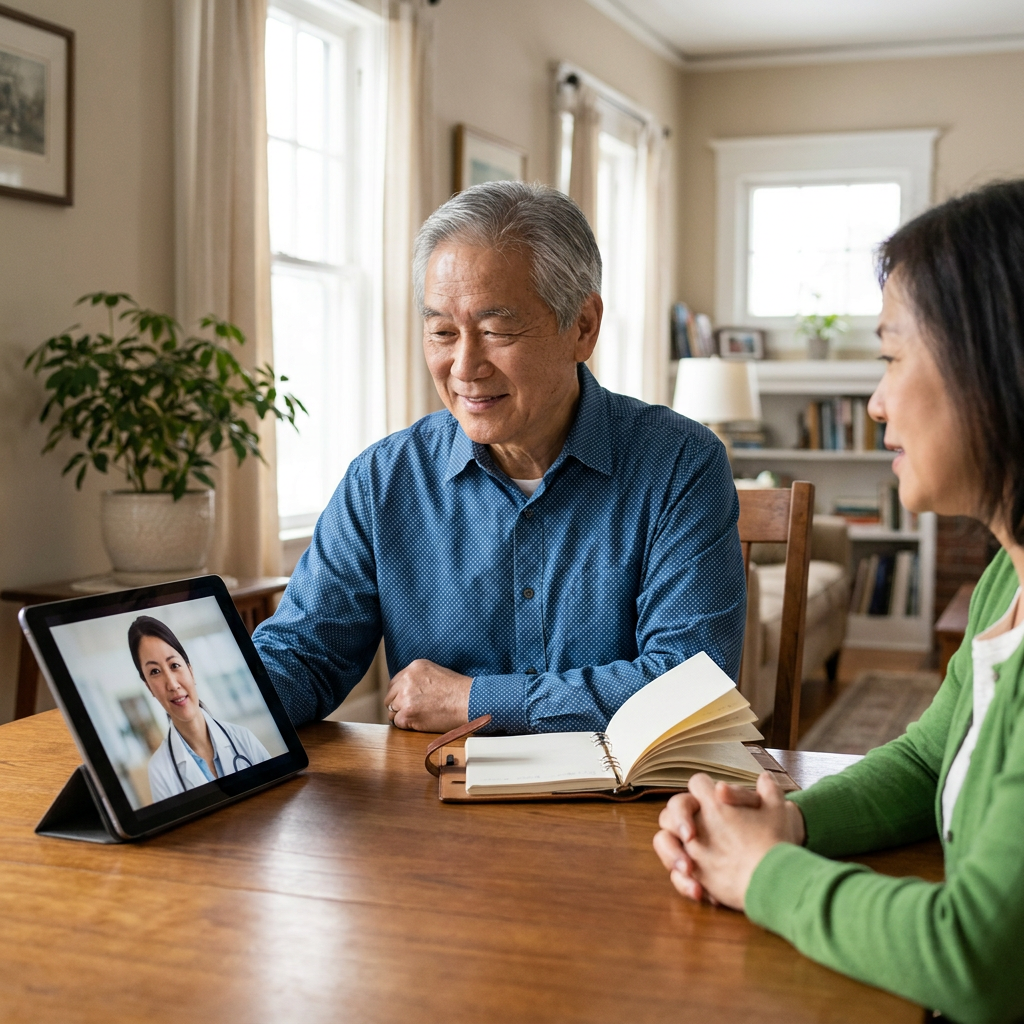
VitalGuard offers daily clinical monitoring, monthly doctor oversight, personalized health coaching, and unlimited telehealth and device support. These services provide opportunities to discuss readings, ask about your routine, and get help using equipment without having to figure everything out alone.
You can learn how VitalGuard remote patient monitoring works and explore its home glucose monitoring device support. Ask which features and sharing methods apply to your own device.
Daily clinical monitoring is not continuous observation or emergency response. Confirm when readings are reviewed, what happens if a reading does not transmit, and how to reach your team. Unlimited support does not mean someone is watching every reading as it arrives.
Know When to Follow Your Care Plan Instead of Waiting
A log supports conversations; it does not diagnose a problem or replace individualized medical advice. Follow your clinician’s instructions for concerning readings or symptoms. Do not wait for someone to review your log when your care plan calls for action.
Do not change prescribed medicines based on this article or an isolated reading. Ask your clinician for clear instructions about unexpected results and when to seek urgent help. Keep those instructions with your testing supplies.
Monitoring and telehealth are not substitutes for emergency care. Call 911 for a medical emergency, such as loss of consciousness or a seizure.
Ask about coverage before getting started
Insurance coverage, including Medicare coverage, depends on eligibility and plan terms. Ask about any costs, device charges, or copays before enrolling. VitalGuard’s explanation of remote patient monitoring Medicare coverage and possible costs can help guide that conversation.
Talk through your next step
Talk with our team about home glucose monitoring and device support. Ask about coverage and what sharing readings could look like in your daily routine.
Editorial status: This educational draft requires review by a qualified diabetes clinician before publication, including verification against current ADA and NIDDK guidance. Add the author’s actual credentials, the clinical reviewer’s credentials, and the completed review date after review. Clinical review has not been represented as complete.